 listicle
Mobile Mechanic for Fleet Vehicles: 7 Services You Need
Table of Contents
- What a Mobile Mechanic for Fleet Vehicles Actually Does
- 1. On-Site Fleet Repair at Your Yard or Job Site
- 2. Fleet Vehicle Diagnostics and Engine Troubleshooting
- 3. Preventive Fleet Maintenance Programs
- 4. Fleet Maintenance Schedule Development and Tracking
- 5. Emergency Breakdown Response and Roadside Assistance
- 6. Commercial Truck and Heavy Equipment Repair
- How to Choose the Right Mobile Mechanic for Your Fleet
- Frequently Asked Questions
Last Updated: October 21, 2026
What a Mobile Mechanic for Fleet Vehicles Actually Does
A mobile mechanic for fleet vehicles brings professional repair and diagnostics directly to your location, eliminating the need to transport multiple company vehicles to a traditional shop. Instead of coordinating drop-offs and waiting for callbacks, a mobile mechanic for fleet vehicles arrives at your yard, job site, or facility with the tools and expertise to diagnose and repair on-site.
At Chris Automotive Repair Service, we understand that fleet downtime costs money. Every hour a vehicle sits in a shop is an hour it's not generating revenue or serving customers. That's why we bring ASE-certified expertise directly to you throughout Polk County, with over 15 years of experience working on everything from light commercial vehicles to heavy equipment.
The real advantage of working with a mobile mechanic for fleet vehicles isn't just convenience, it's control. You see the work happening. You get personalized quotes based on your specific vehicles and needs. You're not paying shop overhead or waiting in a lobby. For fleet managers juggling multiple vehicles, maintenance schedules, and tight budgets, this model changes the equation entirely.
1. On-Site Fleet Repair at Your Yard or Job Site
On-site fleet repair means your vehicles get fixed where they work, not where a shop decides to put them. Whether you're running a landscaping operation with equipment at multiple job sites, managing a construction fleet, or operating delivery vehicles from a central yard, having a mobile mechanic come to you saves hours of logistics and coordination.
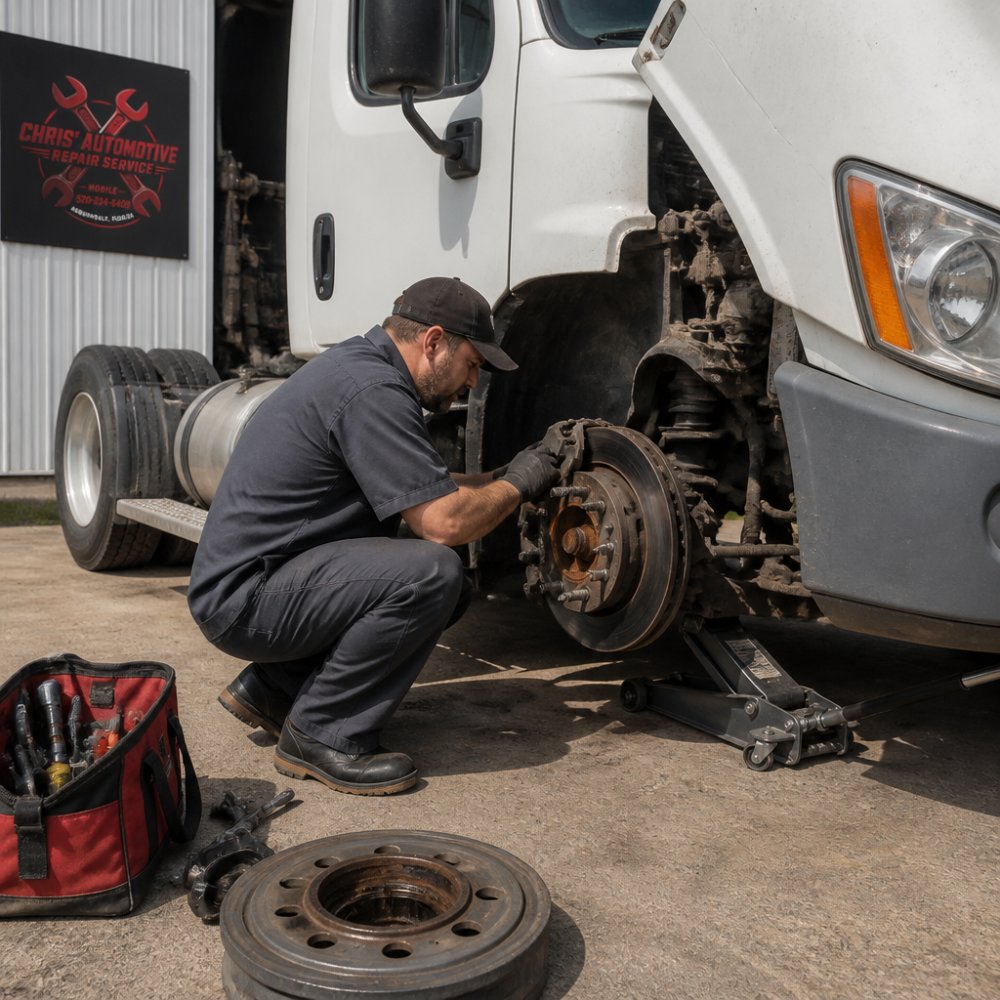
This service covers the full range of repairs that keep commercial fleets moving: brake service, suspension work, engine diagnostics, electrical troubleshooting, A/C repair, and more. The mechanic arrives with diagnostic equipment and tools, performs the work on-site, and provides a detailed report of what was done and what may need attention in the future.
For fleet operators, this eliminates the domino effect of vehicle downtime. You're not waiting for a shop to fit you into their schedule, dealing with rental vehicle costs, or coordinating transportation back and forth. The work happens at your location, on your timeline. We work Monday through Friday to match your operational schedule.
The cost structure is straightforward: you get a personalized quote based on the specific work needed. No hidden shop fees. Just professional service.
2. Fleet Vehicle Diagnostics and Engine Troubleshooting
When a check engine light comes on or a vehicle starts running rough, the real cost isn't the repair, it's figuring out what's actually wrong. Fleet vehicle diagnostics pinpoints the exact problem so you're not guessing or paying for unnecessary work.
Modern fleet vehicles rely on complex electronic systems. A check engine light could mean anything from a loose gas cap to a serious transmission issue. Proper diagnostics uses specialized equipment to read diagnostic trouble codes, test sensors, and identify the root cause.
Engine troubleshooting for commercial vehicles requires understanding how these systems interact. A rough idle might be a fuel injector problem, a spark plug issue, or a vacuum leak. A mobile mechanic with real fleet experience knows where to look first, which saves time and money.
For fleet managers, this service is essential for preventive decision-making. If a vehicle's engine is showing early warning signs, diagnostics catches it before a breakdown leaves you scrambling. You get actionable information: fix it now, monitor it, or plan for replacement. That's fleet management with real data, not guessing.
3. Preventive Fleet Maintenance Programs
Preventive fleet maintenance is the difference between vehicles that last and vehicles that fail unexpectedly. A structured maintenance program keeps your fleet running longer, reduces emergency repairs, and protects your investment.
Preventive maintenance includes scheduled oil changes, fluid checks, filter replacements, brake inspections, suspension checks, and component testing. The goal is simple: catch problems early before they become expensive failures. A worn brake pad caught during routine inspection costs far less than an emergency brake failure on a job site.
The best preventive programs are tailored to your fleet. A landscaping company with equipment running year-round in harsh conditions needs different maintenance than a delivery fleet on paved roads. We develop maintenance plans based on your vehicle types, usage patterns, and operational needs. This prevents over-servicing (paying for work you don't need) and under-servicing (missing critical maintenance).
Scheduled maintenance also keeps you compliant with warranty terms and manufacturer recommendations. Many fleet operators don't realize that skipping maintenance can void warranties or create liability issues. A documented maintenance program protects both your vehicles and your business.
4. Fleet Maintenance Schedule Development and Tracking
A fleet maintenance schedule is a calendar that tells you exactly when each vehicle needs service. Without one, maintenance happens reactively, when something breaks, instead of proactively, when you control the timing.
Developing a maintenance schedule starts with understanding your vehicles. Different makes, models, and years have different maintenance intervals. A 2020 commercial truck has different requirements than a 2016 model. We review your fleet composition and create a schedule that accounts for these differences, manufacturer recommendations, and your operational patterns.
The schedule specifies what service each vehicle needs and when. Oil changes at 5,000-mile intervals. Brake inspections annually. Transmission fluid checks every 50,000 miles. Coolant system maintenance every two years.
Tracking the schedule prevents maintenance from slipping. A simple spreadsheet or fleet management tool records what's been done, what's coming due, and what needs attention. This creates accountability and ensures consistency across all vehicles.
For fleet managers, a maintenance schedule is the foundation of cost control. You're not paying for emergency repairs at premium rates. You're paying for planned maintenance during normal business hours. The schedule pays for itself in reduced downtime and extended vehicle life.
5. Emergency Breakdown Response and Roadside Assistance
Fleet breakdowns happen. A vehicle fails on a job site, on the road, or at a customer location. When it does, you need help fast, not a shop that's booked three weeks out.
Emergency breakdown response means a qualified mobile mechanic can diagnose and repair the issue on-site, often within hours instead of days. If a vehicle won't start, an engine is overheating, brakes are failing, or electrical systems are down, roadside assistance gets you back operational quickly.
For issues that require more extensive work or parts not available on-site, a mobile mechanic can still provide temporary solutions to get the vehicle limping to a service location or back to your yard. This prevents complete operational shutdown and gives you time to plan the next steps.
The advantage of having a trusted mobile mechanic for emergency situations is reliability. You know who's coming. You know their experience level. You're not waiting for an unknown tow truck driver or dealing with a shop's emergency rates. We service Polk County and understand the area, so response times are predictable.
6. Commercial Truck and Heavy Equipment Repair
Commercial trucks and heavy equipment operate under different demands than standard vehicles. They carry heavier loads, run longer hours, and experience more wear. Repairs for this equipment require specific knowledge and experience.
Truck repair covers everything from light commercial pickups to full-size commercial vehicles. Suspension systems on heavy trucks handle constant payload stress. Braking systems must manage greater stopping distances and heat. Engines in commercial trucks run at higher use rates. Transmission systems in commercial vehicles face different demands than passenger vehicles.
Heavy equipment repair extends beyond trucks to landscaping equipment, construction machinery, and specialized tools. Hydraulic systems, diesel engines, PTO (power take-off) systems, and heavy-duty components require technicians who understand their specific operation and failure modes.
With over 15 years of experience working on all makes of vehicles and heavy equipment, we handle the full scope of commercial truck and equipment repair. This includes diagnostics, component replacement, hydraulic hose repair, engine work, electrical troubleshooting, and preventive maintenance. We come to your location, assess the equipment, and provide a quote for the work needed.
How to Choose the Right Mobile Mechanic for Your Fleet
Choosing a mobile mechanic for fleet vehicles isn't just about finding someone who can turn a wrench. It's about finding someone reliable, qualified, and experienced enough to handle your specific needs without creating new problems.
Start with credentials. Ask for ASE certification verification. ASE (Automotive Service Excellence) certification means the technician has passed rigorous exams and meets industry standards. It's not a guarantee of quality, but it's a baseline.
Experience matters more than anything else. How long has the mechanic been in business? What types of vehicles and equipment do they work on?
Ask about their service area and availability. Some mobile mechanics operate in limited geographic zones. We service all of Polk County, which means consistent response times and familiarity with local conditions.
Get a clear quote process. A good mobile mechanic provides personalized quotes based on your specific situation, not generic pricing.
Check for warranty or guarantee on work performed. If something goes wrong after repair, what recourse do you have? A reputable mobile mechanic stands behind their work.
Ask about their approach to preventive maintenance. Do they just fix problems, or do they help you prevent them?
| Selection Criteria | What to Look For | Why It Matters |
|---|---|---|
| Certification | ASE certification verified | Confirms industry-standard training and testing |
| Experience | 15+ years in fleet/commercial work | Recognizes complex issues and solves efficiently |
| Service Area | Full Polk County coverage | Consistent response times and local knowledge |
| Availability | Matches your operational schedule | Service happens when you need it, not when they're free |
| Transparency | Personalized quotes, detailed explanations | You understand costs and what's being fixed |
| Preventive Focus | Recommends maintenance, not just repairs | Reduces emergency breakdowns and extends vehicle life |
| Warranty | Stands behind work performed | Protection if issues arise after repair |
Frequently Asked Questions
What types of vehicles can a mobile mechanic for fleet vehicles repair?
A mobile mechanic for fleet vehicles can service commercial trucks, pickups, vans, trailers, and heavy equipment. ASE-certified mobile mechanics handle engine repair, brakes, suspension, electrical diagnosis, and A/C repair for all makes and models. Some mobile mechanics also work on landscaping equipment and specialized machinery. Always confirm the mechanic's experience with your specific vehicle types before scheduling service.
How does a fleet maintenance schedule reduce vehicle downtime?
A fleet maintenance schedule prevents unexpected breakdowns by identifying wear patterns before failure occurs. Regular inspections catch brake, suspension, and engine issues early. Mobile service eliminates the time spent transporting vehicles to a shop, keeping your fleet operational longer. Scheduled maintenance also extends vehicle life, reducing the frequency of major repairs that sideline equipment for days.
Can a mobile mechanic service multiple fleet vehicles at one location?
Yes. Mobile mechanics can service multiple vehicles at your fleet yard or job site in a single visit. This is one of the key advantages for fleet operators: instead of staggering trips to a repair shop, you can have several vehicles serviced simultaneously at your location. The mechanic brings diagnostics and repair tools on-site, minimizing operational disruption and keeping your entire fleet running.
What should I look for when selecting a mobile mechanic for my fleet?
Verify ASE certification, which confirms the mechanic has passed rigorous automotive knowledge tests. Ask about years of experience with commercial vehicles and your specific equipment types. Confirm they offer fleet preventive maintenance programs and can provide personalized quotes. Check their service area and availability. Ask how they handle warranty or guarantees on repairs. A reputable mobile mechanic should be transparent about credentials and willing to discuss their experience with fleet-sized operations.
When you're managing a fleet, reliability isn't optional, it's essential. Chris Automotive Repair Service brings ASE-certified expertise and 15 years of experience directly to your fleet. We provide personalized diagnostics, preventive maintenance programs, and emergency repair response throughout Polk County. Get a quote today and see how mobile service keeps your fleet operational without the traditional shop overhead. Contact us at (520) 234-6409 to schedule your service.